
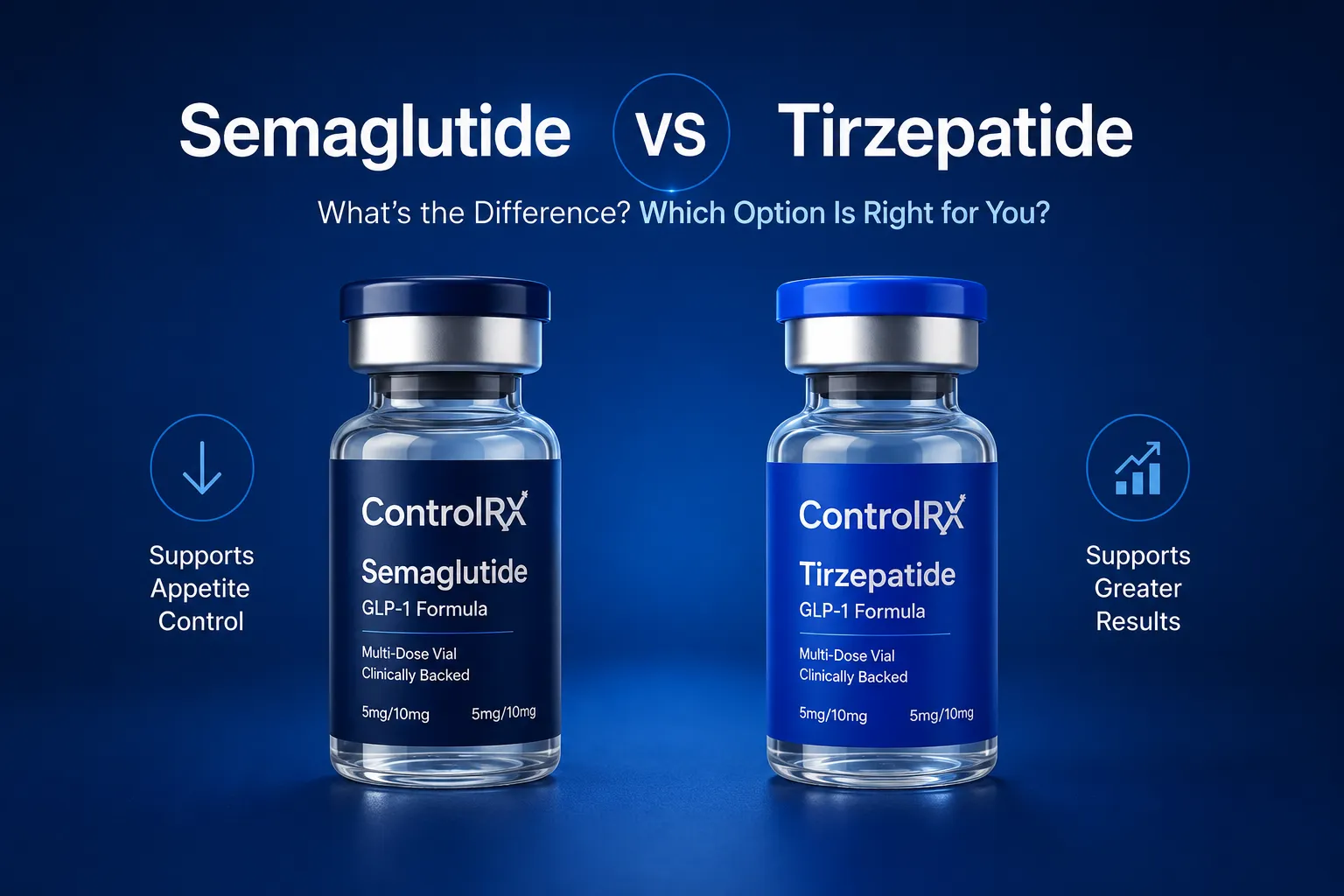
Semaglutide vs. Tirzepatide: What’s the Difference?

If you’re exploring GLP-1 treatment options, two names you’ll likely encounter are Semaglutide and Tirzepatide. Both medications have become popular choices in medical weight management programs, helping patients reduce appetite, improve consistency, and work toward long-term weight-loss goals. While they share similarities, there are important differences that may influence which option is the better fit for an individual’s needs.
Semaglutide works by mimicking the effects of the natural GLP-1 hormone in the body. This hormone helps regulate appetite, slow digestion, and promote feelings of fullness after eating. By enhancing these natural signals, Semaglutide can help reduce hunger, support portion control, and make it easier for patients to maintain healthy eating habits. Many individuals find that they experience fewer cravings and greater consistency in their nutrition while using Semaglutide as part of a comprehensive weight-management plan.
Tirzepatide takes a slightly different approach. In addition to targeting GLP-1 receptors, Tirzepatide also activates GIP (glucose-dependent insulinotropic polypeptide) receptors. This dual-action mechanism provides an additional pathway for supporting appetite regulation and metabolic function. Because of this, Tirzepatide has attracted significant attention for its potential to help patients achieve substantial weight-loss results when combined with healthy lifestyle habits and medical supervision.
One of the most common questions patients ask is whether one medication works better than the other. The answer depends on individual factors such as medical history, weight-loss goals, treatment preferences, and provider recommendations. Some patients may respond extremely well to Semaglutide and appreciate its proven track record, while others may benefit from the additional support offered by Tirzepatide’s dual-action mechanism.
Both medications may help patients feel fuller for longer periods, reduce food cravings, and improve overall consistency with their nutrition plans. However, individual results vary, and no treatment can guarantee specific outcomes. Success often depends on maintaining healthy eating habits, staying physically active, following provider guidance, and remaining consistent throughout the treatment journey.
Like many medications, both Semaglutide and Tirzepatide can cause side effects. The most commonly reported effects are digestive-related and may include nausea, constipation, bloating, or mild stomach discomfort. These symptoms are often temporary and may improve as the body adjusts to treatment. Healthcare providers typically use gradual dosing schedules to help patients tolerate treatment more comfortably.
Cost and treatment plans can also influence a patient’s decision. Some individuals prioritize affordability and simplicity, while others may focus on maximizing support for long-term weight-management goals. Understanding the differences between available options allows patients to have more informed conversations with their healthcare providers and choose an approach that aligns with their personal objectives.
At ControlRX, our goal is not to recommend a one-size-fits-all solution. Instead, we focus on helping patients understand their options and receive personalized guidance based on their unique circumstances. Whether you’re considering Semaglutide or Tirzepatide, a provider-reviewed treatment plan can help ensure that your weight-loss journey is both safe and sustainable.
Choosing between Semaglutide and Tirzepatide is ultimately a personal decision that should be made with professional medical guidance. By understanding how each medication works and what makes them different, patients can feel more confident in selecting the option that best supports their long-term health and wellness goals.